Better Forecasts, Better Decisions: Pacific Forecasters Strengthen Seasonal Climate Services for Communities and Sectors
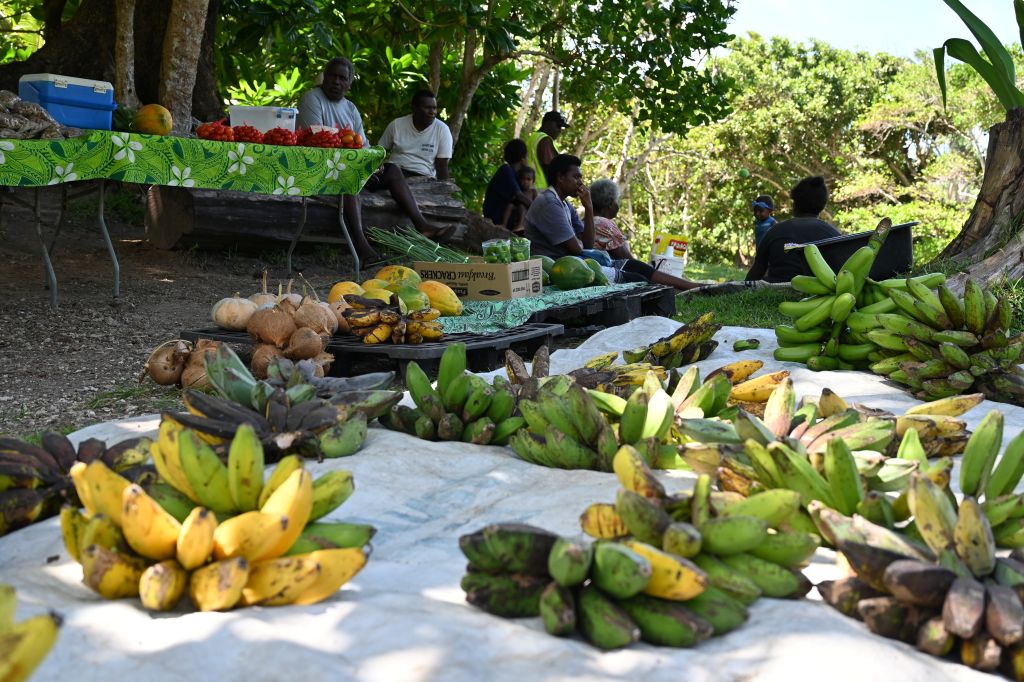
Apr 28, 2026Nadi, Fiji – When a seasonal forecast reaches a farmer in Vanuatu ahead of planting, the water authority in Palau before the dry season, or a disaster management office in Fiji as cyclone season approaches, the quality of that forecast matters. It shapes the decisions that protect livelihoods, food supplies and lives.
That is why climate science officials from 14 Pacific Island countries gathered in Nadi, Fiji, from 20 to 22 April for a three-day regional training workshop focused on the Pacific Island Countries Advanced Seasonal Outlook (PICASO), the region’s tailored seasonal prediction platform. The workshop, held as part of the pre-PICOF (Pacific Islands Climate Outlook Forum) training programme, was jointly hosted by the Secretariat of the Pacific Regional Environment Programme (SPREP), the APEC Climate Center (APCC) and Seoul National University, and brought together approximately 40 participants including operational meteorological officers and practitioners in water resources, public works and agriculture.
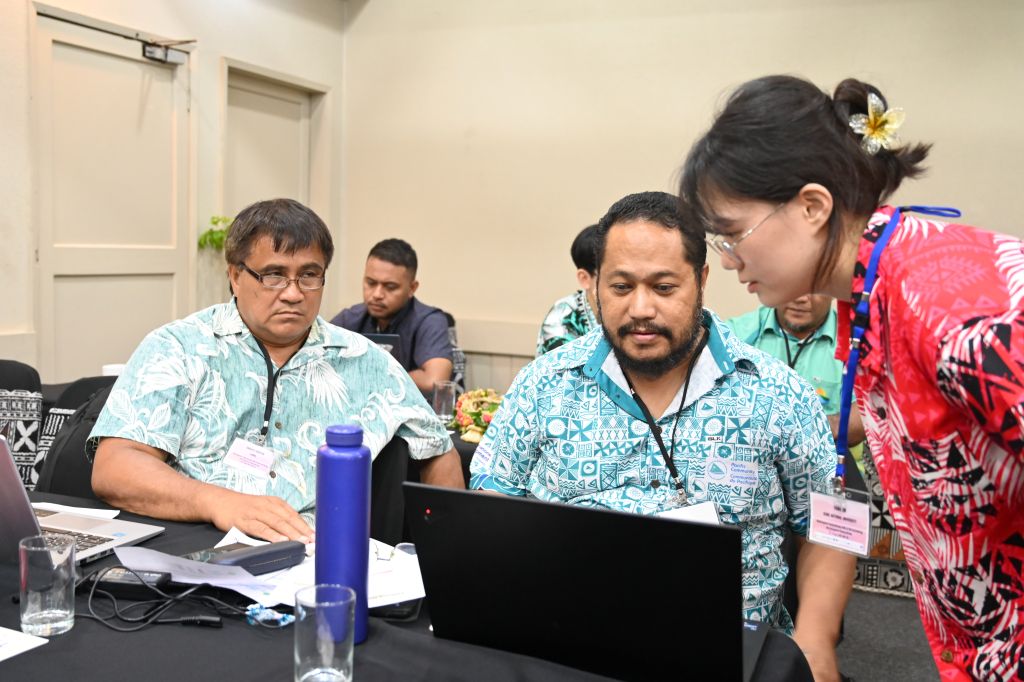
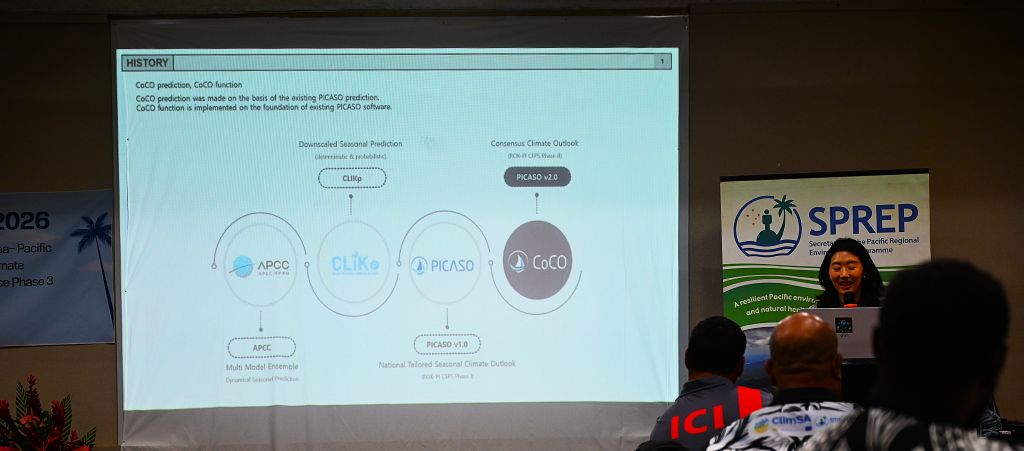
Building on earlier rounds of PICASO training, this workshop marked a deliberate shift from system familiarisation toward operational strengthening. The focus of this training was practical, focussing on how forecasters can use PICASO and the Consensus Climate Outlooks (CoCO) platform to produce seasonal outlooks that are not only technically robust but genuinely useful to the sectors and communities that rely on them.
For Pacific Island communities, seasonal climate information informs when crops are planted and harvested, how water supplies are managed through dry spells, whether fishing communities prepare for disrupted seasons, and how disaster management authorities position resources ahead of extreme weather. Across the Pacific, agriculture, fisheries, water and disaster preparedness sectors all depend on timely, well communicated forecasts from their National Meteorological and Hydrological Services (NMHSs) to guide planning and protect vulnerable populations.
A full day of the workshop was dedicated to sector engagement. In mixed breakout sessions, NMHS officers worked alongside regional sector representatives to examine how seasonal forecast products can better serve operational needs on the ground. Discussions focused on aligning forecast delivery with sector planning cycles, so that climate information arrives when decisions are actually being made.
Participants explored how to communicate probability and uncertainty in ways that are meaningful to non-technical users, identified sector specific climate thresholds that trigger operational decisions, and designed sector informed seasonal climate advisories using probabilistic forecasts.
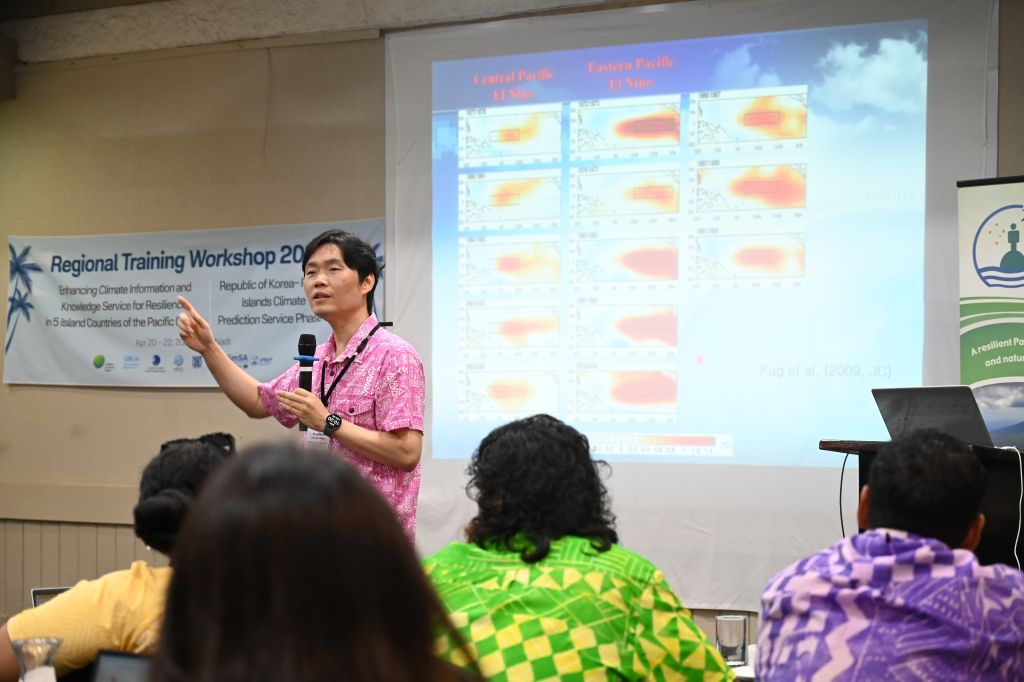
Researchers from Seoul National University delivered sessions on the large-scale climate phenomena that drive seasonal variability across the Pacific, including El Niño diversity and the Madden Julian Oscillation (MJO). Understanding these drivers is essential for forecasters to interpret what prediction models are showing and to communicate seasonal outlooks with confidence to the sectors and communities that act on them.
PICASO sits alongside the Australian Bureau of Meteorology’s ACCESS-S system, delivered through the Climate and Oceans Support Program in the Pacific (COSPPac), as one of the region’s core seasonal prediction tools. While each system brings different strengths, together they complement and strengthen the regional approach to seasonal prediction and preparedness, giving NMHSs access to a wider range of dynamical and statistical model outputs from which to build their national seasonal outlooks.
This collaborative approach is underpinned by the WMO Pacific Regional Climate Centre (RCC) Network, which provides a coordinating framework for long range forecasting, climate monitoring, climate change projections, data services and training across the region. Both APCC and SPREP are consortium members of the RCC Network’s Long Range Forecasting Node, and the PICASO training programme forms part of their joint commitment to supporting Pacific NMHSs through the RCC Network to deliver better climate services and products to Pacific communities.
Acting APCC President Kim Hyung Jin said: “Through this training, the climate prediction and data analysis capabilities of practitioners in Pacific Island nations have been further strengthened. We will continue to build precise climate information services that reflect local demand to support climate crisis response and sustainable development.”
Due to their unique geographical characteristics, Pacific Island countries face significant exposure to climate variability and extreme weather, from tropical cyclones and drought to coastal inundation driven by sea level rise. For small island nations where a single severe season can devastate food production or overwhelm water systems, the ability to anticipate conditions weeks and months ahead is a critical line of defence. Strengthening seasonal forecast capacity across the region directly supports the resilience of the communities, industries and ecosystems that sustain Pacific livelihoods.
The workshop was delivered through a coordinated approach linking two complementary initiatives: the Green Climate Fund (GCF) and United Nations Environment Programme (UNEP) project on Enhancing Climate Information and Knowledge Services for Resilience in Pacific Island Countries, and the Republic of Korea–Pacific Islands Climate Prediction Services 3 Project. Operating the workshop as a joint event integrated both project workstreams, maximising training efficiency and regional cooperation. The meeting was also supported by the European Union-funded Climate Services and Related Applications Project (ClimSA).
PICASO, developed through a research and development partnership with the Korea Meteorological Administration, continues to evolve as a core tool in the Pacific’s seasonal climate services architecture. APCC has indicated that feedback gathered during the Nadi workshop will inform future system upgrades, ensuring the platform remains responsive to the operational realities and priorities of Pacific NMHSs and the sectors and communities they serve.
