ClimSA Pacific Expands Coding Capacity Training to Polynesia with Tonga Workshop
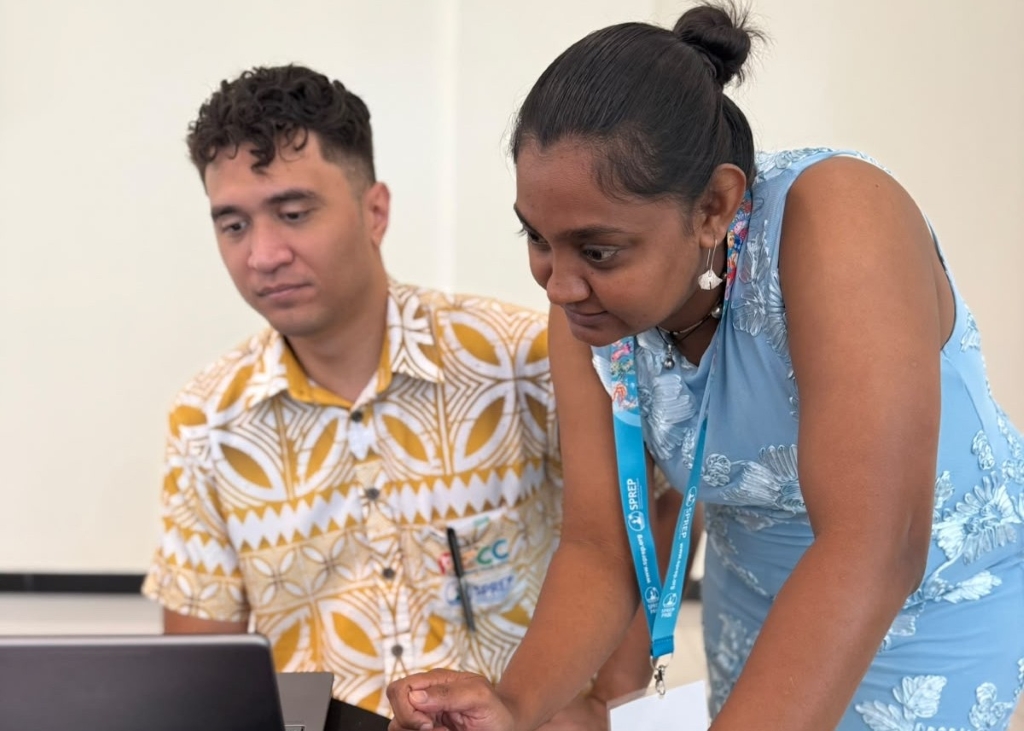
Jul 2, 2026A five-day workshop in Python programming for climate data analysis is underway this week in Nukuʿalofa, bringing together National Meteorological and Hydrological Services (NMHS) staff from across Polynesia through the funding support of the European Union’s Climate Services and Related Applications Programme in the Pacific (ClimSA).
Across Pacific Island countries, most weather offices depend on proprietary software to generate the climate products their communities rely on. These are tools that cannot be adapted to local conditions, interrogated when outputs are unclear, nor can they be maintained if the one staff member who knows how to operate them is no longer available.
When that happens, bulletins go out late or not at all, and seasonal outlooks become outdated and irrelevant. This is the operational vulnerability that the ClimSA Pacific capacity building series is designed to address.
“For a long time, weather offices here in the Pacific have had to use computing tools that we didn’t build and couldn’t change. This week, we are learning to use new, free tools that allow us to create our own weather stories. When we make our own maps and charts, we truly own the information and can better help our people,” said Mr. Salesa Nihmei, Director of SPREP’s Climate Science and Information Programme, at the opening of the Tonga workshop.
The workshop is jointly facilitated by Associate Professor Awnesh Singh from USP’s Centre for Sustainable Futures under the APN CAPYTHON project, alongside Dr. Philip Sagero and Dr. Shilpa Lal and technical staff from Earth Science New Zealand (ESNZ).
The training covers the full stack of open-source climate data programming. Sessions cover Python fundamentals and scientific libraries including NumPy, Pandas, Xarray, and Cartopy, through to time series analysis, spatial mapping, and the processing and visualisation of NetCDF datasets.
A dedicated session focuses on connecting Python workflows directly to CliDE, the climate database system most Pacific NMHSs already operate, enabling the automation of routine products such as monthly bulletins and climate summaries that currently require manual production.
By the final day, participants will have worked with station data, gridded datasets, and satellite-derived products to produce publication-ready maps and scientific visualisations from raw data. A session on future applications introduces cloud-based tools including Google Colab, GitHub workflows, and dashboard development, pointing toward longer-term possibilities for collaborative and remotely accessible climate service delivery.
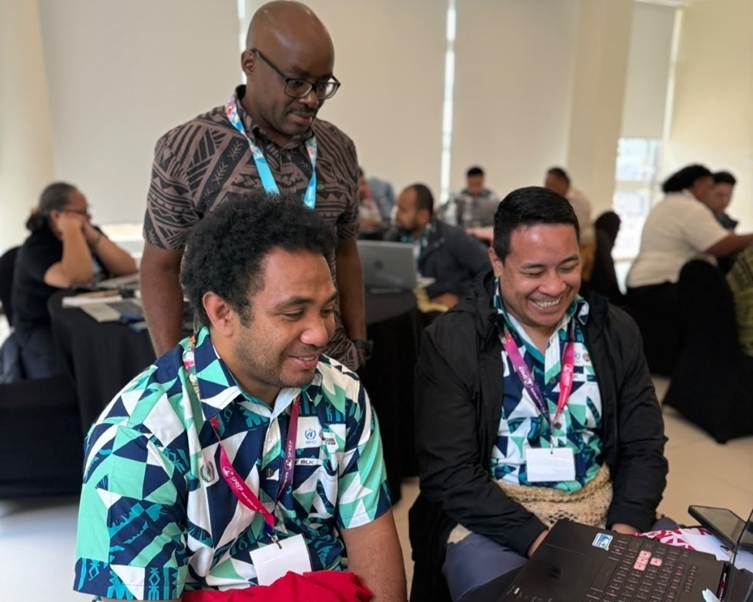
A core design principle of the ClimSA Pacific capacity building series is that training should not vest in a single individual. The workshop carries forward the train-the-trainers model established in Suva. Participants leave Tonga with not just new skills but a full training package, including session plans, structured documentation, and working code repositories that can be adapted to each country’s data environment and delivered to colleagues at home.
The participants were selected because they have both the technical background to absorb the material and the standing within their organisations to teach it forward, meaning that the ClimSA Pacific programme’s investment in this workshop is not bounded by the number of people in the room.
“You have been chosen for this training because you have the skills to lead. This is a learn-and-then-teach programme. We expect you to take what you learn here in Tonga back to your home islands and teach your workmates,” added Mr. Nihmei.
The decision to customise this second training for Polynesian met services reflects the ClimSA Pacific programme’s approach to demand-responsive capacity development: responding to what Pacific institutions identify as priorities and working with partners to build the technical infrastructure to meet them.
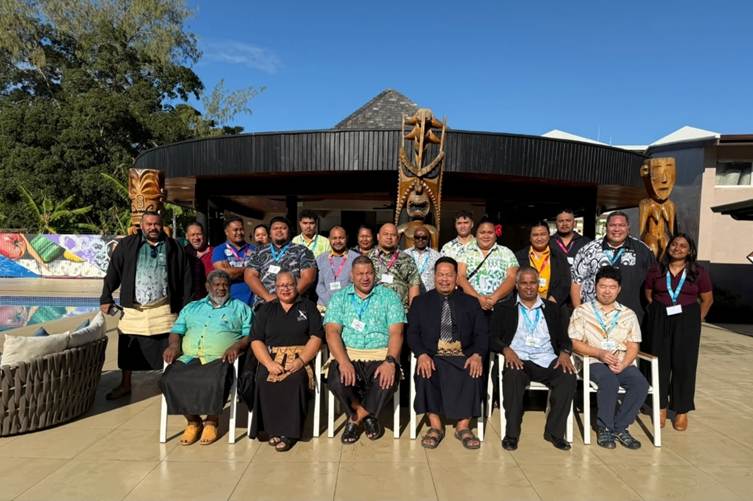
The Climate Data Analysis using Python Programming workshop, from 28th June to 3rd July at the Tanoa International Dateline Hotel, is the second in a series of EU-funded training activities delivered under the ClimSA Pacific programme. It follows a Train-the-Trainers workshop held at the University of the South Pacific in Suva in May, 2026, which equipped IT specialists from Fiji, Solomon Islands, Papua New Guinea, and Vanuatu with the programming skills.
Following that first workshop, meteorological services in Polynesia requested an equivalent training tailored to their operational context, and the ClimSA Pacific programme worked with partners to design and deliver this Tonga session accordingly.
The APN-funded CAPYTHON project has developed the training curriculum, resources and regional programming capacity that underpin these workshops, while the European Union-funded ClimSA Pacific programme has enabled the expansion of this capacity-building initiative across the Pacific. It is supported by the Climate and Oceans Support Program in the Pacific (COSPPac).
ENDS
About ClimSA Pacific:
The Climate Services and Related Applications (ClimSA) Programme in the Pacific is a transformative initiative funded by the European Union and implemented by SPREP in partnership with the ACP Secretariat. ClimSA Pacific aims to strengthen climate information services, enhance early warning systems, and empower decision-making across key sectors through tailored, actionable climate products. By supporting National Meteorological and Hydrological Services (NMHSs) and regional coordination, ClimSA Pacific is building a more resilient and climate-informed Pacific community.
About USP and APN CAPYTHON:
The University of the South Pacific (USP), through its Centre for Sustainable Futures, leads the APN CAPYTHON project funded by the Asia-Pacific Network for Global Change Research (APN). The project is strengthening programming, climate data analysis and digital climate services capabilities across National Meteorological and Hydrological Services in the Southwest Pacific through training, mentoring and open-source tools. The collaboration between APN CAPYTHON and ClimSA Pacific demonstrates how regional partnerships can accelerate sustainable climate services capacity development.
For more information, contact:
Patricia Mallam (patriciam@sprep.org)
WhatsApp: +6799962972
